

Fashion on the ice – Why don’t luxury labels dress female figure skaters?
Few sports rely as heavily on clothing as figure skating. Yet luxury fashion houses have been suspiciously absent from the ice. How can this be explained?
By Jana Schibli Mode
 American Alysa Liu won the gold medal with her free skate at the 2026 Winter Olympics. She wore a dress by Lisa McKinnon, a former figure skater. Credit: Getty Images
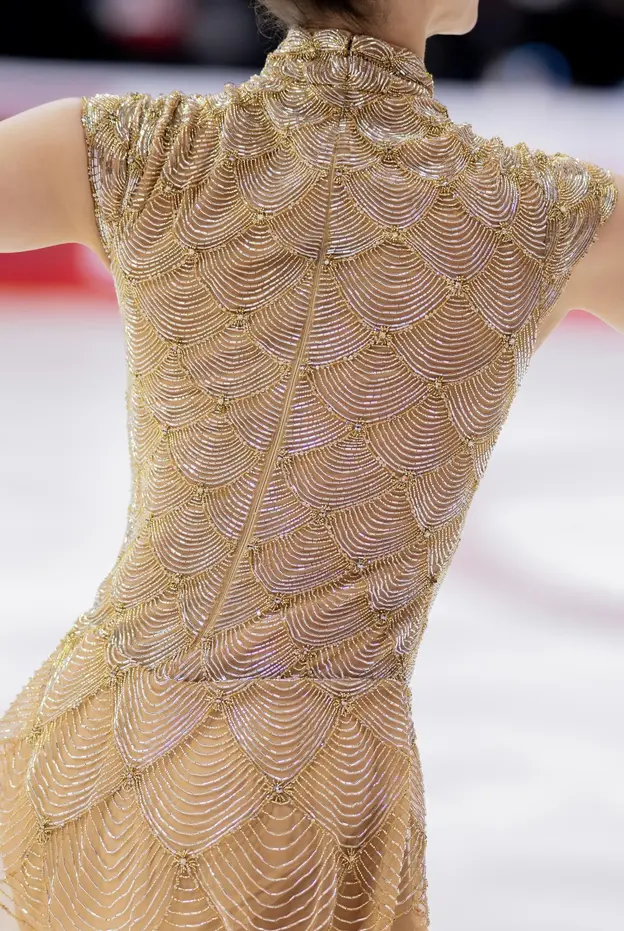
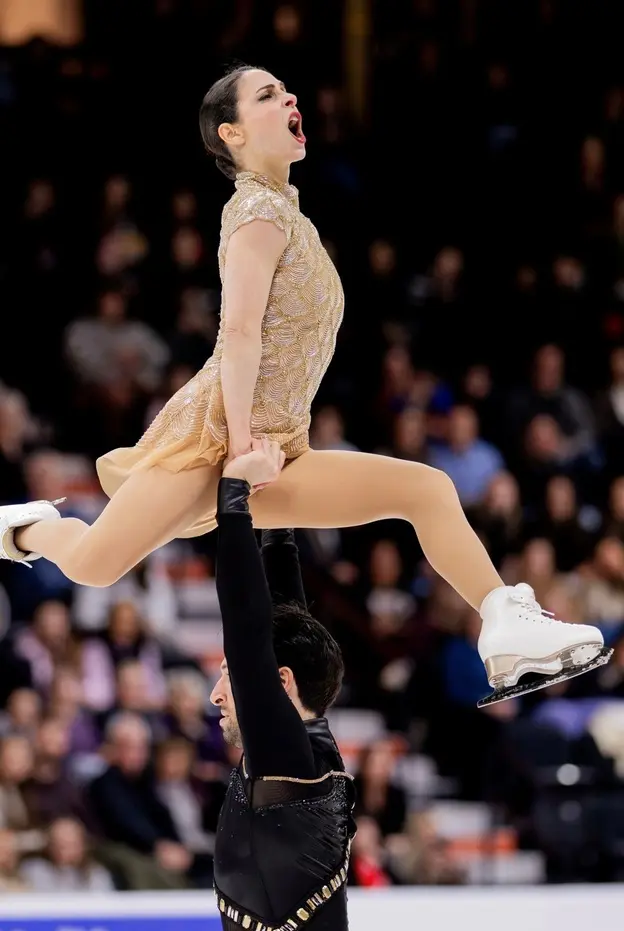
The glitter was different. A bit more three-dimensional than usual, a little denser. And the skirt? It floated more than it fluttered during the jumps, its tulle strikingly stiff. These were the details that revealed that figure skater Deanna Stellato-Dudek was wearing two custom-made gowns by the New York fashion house Oscar de la Renta on the ice at the 2026 Winter Olympics in Milan. But as everyone in figure skating knows, details make all the difference.


One color, many dimensions: One of Oscar de la Renta’s custom-made creations for figure skater Deanna Stellato-Dudek. Maxwell Swift courtesy of Oscar de la Renta.
Stellato-Dudek, a Canadian pair skater who finished eleventh with her partner Maxime Deschamps, was a notable exception in Milan. Otherwise, the athletes on the ice wore no luxury labels, but rather outfits by specialized costume designers like Lisa McKinnon, Mathieu Caron, and Satomi Ito, who currently represent something of a holy trinity in figure skating attire.
When American Ilia Malinin wore Balmain jeans to the closing ceremony of the Olympic Games, the brand responded to an inquiry from the “New York Times” by stating that it had not collaborated with him. However, it was “a great honor.”
Symbiosis of luxury fashion and sport
This stands in stark contrast to other sports. Coco Gauff plays tennis in Miu Miu sneakers, and the NFL has employed its own “fashion editor” since 2024, whose role includes connecting football players with the fashion world. Luxury fashion and sports have long since formed a symbiotic relationship: the labels gain visibility and prestige, while the athletes receive lucrative sponsorship deals and a more stylish wardrobe.
Figure skating would be ideally suited for this. In hardly any other sport is visual storytelling so important, is glamour so much a part of the image.
 American Ilia Malinin in his own Balmain jeans. He wore them to the Olympic gala, but not in competition. Credit: Getty Images
“Figure skating undoubtedly has its aesthetic appeal,” writes Merrick Haydon, long-time luxury analyst and founder of the sports marketing agency ThirtyThree18, in an email response to an inquiry. “However, luxury brands generally tend to gravitate towards sports that have a consistent global presence, strong professional leagues, and year-round cultural relevance,” Haydon continues. Such as tennis, football , and Formula 1 .
Figure skating, on the other hand, usually only attracts a large audience every four years, namely when the Winter Olympics take place. The European Championships and the currently ongoing World Championships draw less attention. “Figure skating is a niche sport,” says former Swiss figure skater Sarah van Berkel in a video call. It’s understandable that investments in this area are hesitant.
Cult costumes
There are, however, role models. The French couturier Christian Lacroix , already inclined towards theatricality, transformed the French figure skater Surya Bonaly into a female matador and an ice queen for the 1992 Winter Olympics using tulle and gigantic rhinestones.
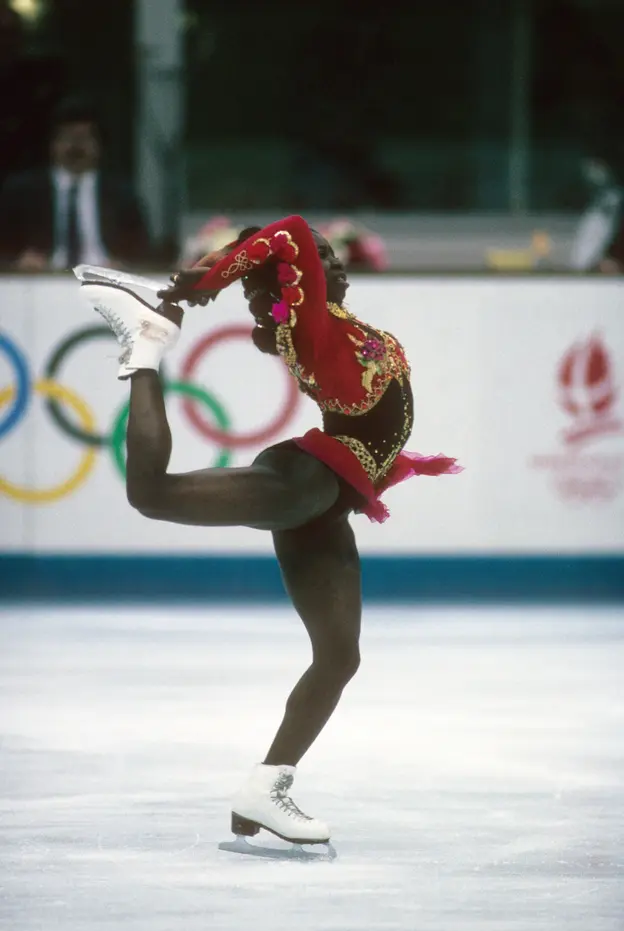
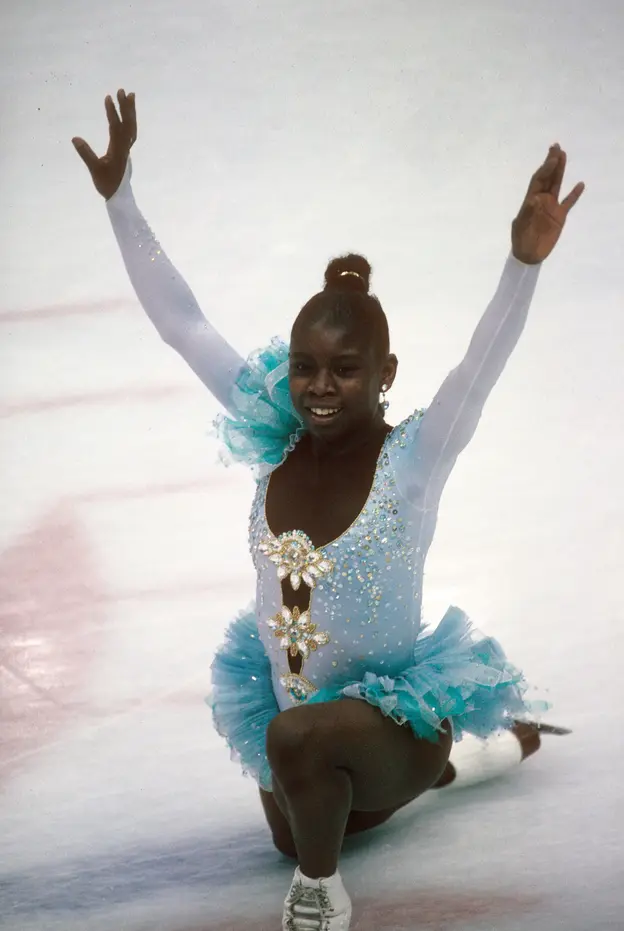
The Frenchwoman Surya Bonaly at the 1992 Olympic Games in costumes by Christian Lacroix. Credit: Getty Images
The costumes have since become iconic. But back then, they were ridiculed. “As if they came from a flea market at Hugh Hefner’s mansion,” wrote Newsweek magazine, for example. At the next Olympic Games, Bonaly again wore costumes that her mother had sewn.
The simple, slightly flared dresses by designer and former figure skater Vera Wang were more popular. “The elegant exception,” the New York Times called her designs for Nancy Kerrigan in 1994. In the following decades, Wang also dressed stars like Michelle Kwan, Nathan Chen, and Evan Lysacek. But, as she once said , “It’s not for the faint of heart.” You have to understand something about physics.
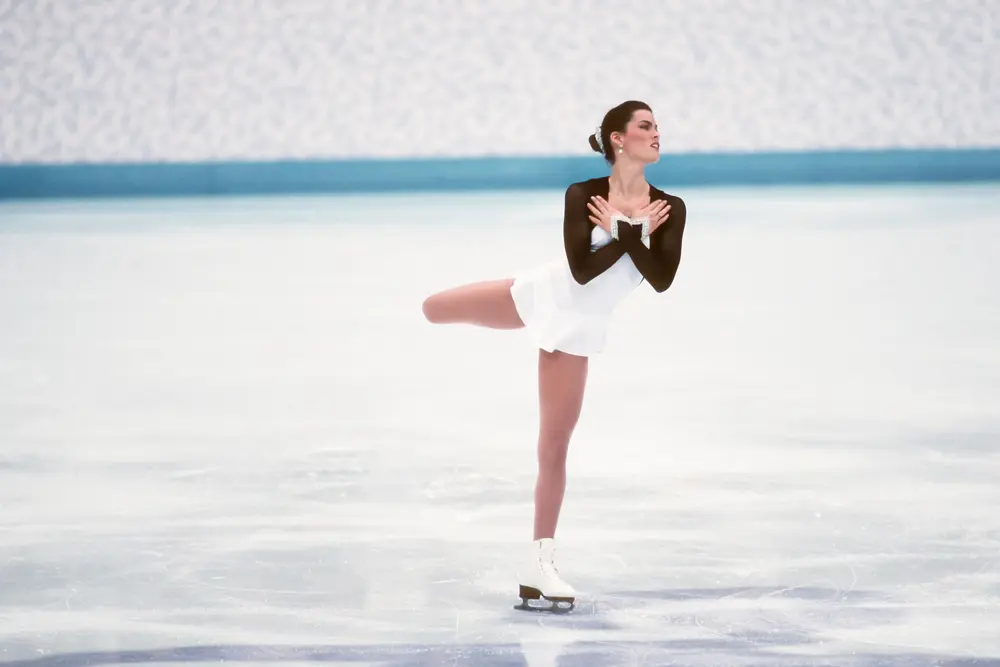 American Nancy Kerrigan in a costume by designer Vera Wang at the 1994 Winter Olympics. Getty Images Credit: Getty Images
For Sarah van Berkel, these high standards are one of the main reasons why designer costumes haven’t yet caught on on the ice. “The most important thing is freedom of movement,” she says, “fabrics have to stretch in all directions.” A skirt that’s too long or the weight of ten thousand rhinestones can also restrict the athletes. A top or bottom that threatens to slip is distracting. Costume parts that come loose result in point deductions.
The price of a dress
“Today, the technical level is so high that the weight of the costumes and materials plays an even greater role,” says Sarah van Berkel. That’s why experienced costume designers are in high demand. Many of them come from figure skating or at least dance. This is often evident in the costumes, with their flesh-colored mesh, abundant glitter, and easily recognizable musical references.
In the end, I would argue that a medal is more important.
Sarah van Berkel
American figure skater Madison Chock designs her own costumes, which are then sewn by costume designers like Mathieu Caron. She also regularly designs – in a rather unconventional arrangement – the costumes of her competitors from countries such as Spain, Australia, and Georgia.
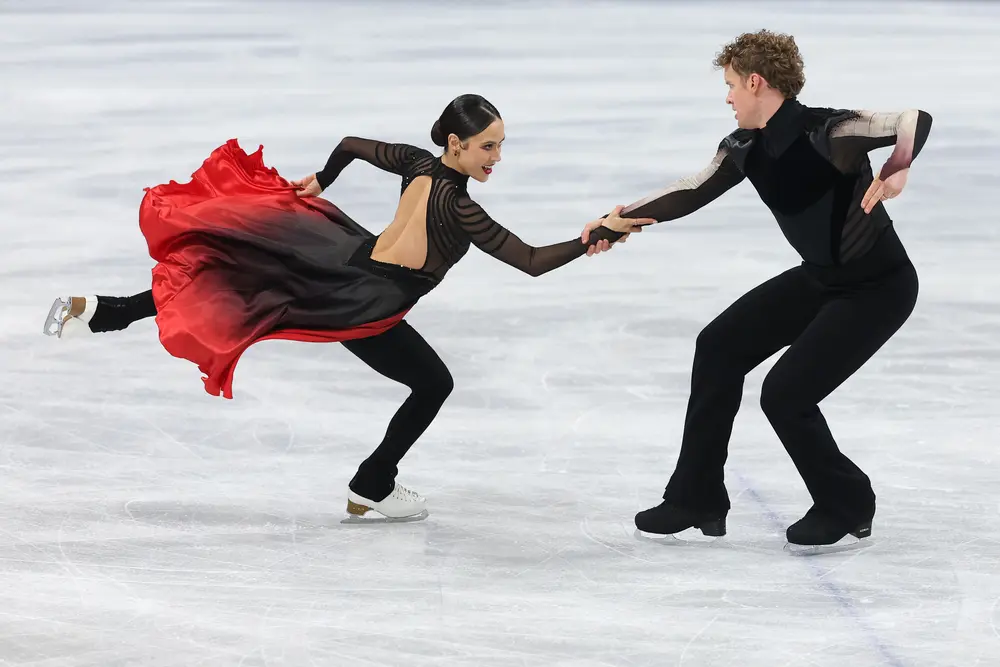 Madison Chock, pictured here at the 2026 Winter Olympics with her partner Evan Bates, designs her own costumes. Getty Images Credit: Getty Images
Most costumes are created through collaboration between the athletes and their choreographers and costume designers. They can cost anywhere from a few hundred to several thousand Swiss francs, depending on the complexity and embellishment. During fittings, the fit is adjusted to ensure every movement of a routine is possible. This can take months, but in emergencies, it can be accomplished in just a few days. Many figure skaters wear their costumes for an entire season, every time they perform a particular program. Therefore, the costumes have to be quite durable.
A new trend?
This means a couture-like effort for interested design houses. According to Oscar de la Renta, Deanna Stellato-Dudek’s champagne-colored dress, for example, is covered with over 100,000 crystals and pearls, which were attached by hand in over 660 hours of work. The red, flamenco-inspired dress with the asymmetrical neckline required over 950 hours of work.
Liu in Vuitton
The relationship between luxury fashion and figure skating is nevertheless thawing. One of the star guests at the Louis Vuitton show during Paris Fashion Week in March was Alysa Liu, the American Olympic gold medalist. The 20-year-old is also celebrated for her Gen Z-typical style: hair dyed like tree rings, baggy jeans, and a palate piercing. Since the opening ceremony of the Olympic Games, Liu’s number of Instagram followers has grown from a few hundred thousand to almost eight million. This is valuable for luxury brands.
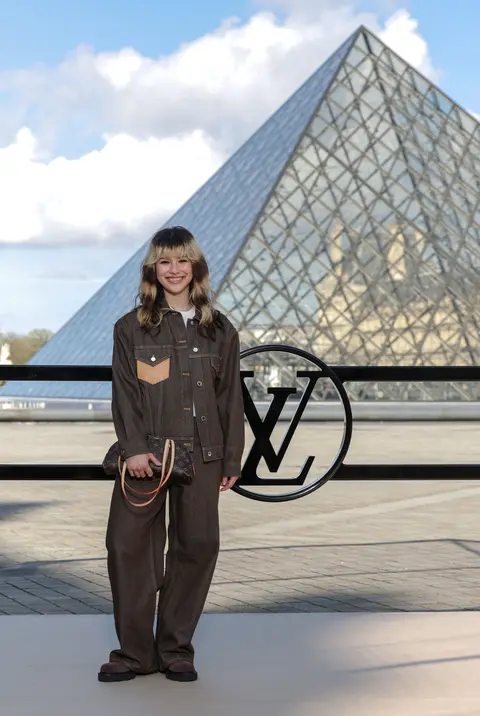 Fashion star on the rise: American figure skater Alysa Liu at the Louis Vuitton show in March 2026. Credit: Louis Vuitton
In Paris, Liu was dressed head to toe in Louis Vuitton. The wide-legged denim suit and chunky boots suited her perfectly. She also wore a Louis Vuitton dress to Vanity Fair’s Oscars after-party, this time with a touch of sparkle. Jacob Gallagher, fashion journalist for The New York Times, expects her to grace the cover of Vogue by the end of the year. But on the ice, Alysa Liu, like so many others, wears dresses by Californian costume designer Lisa McKinnon, a former figure skater. Will that remain the case?
Full article available online: https://bellevue.nzz.ch/stil-design/mode/eiskunstlauf-wm-2026-wieso-gibt-es-keine-kostueme-von-luxuslabels-ld.1927731
Oscar de la Renta, Deanna Stellato-Dudek, Lisa McKinnon, Mathieu Caron, Satomi Ito, Vanity Fair, Louis Vuitton, Jacob Gallagher, New York Times, Ilia Malinin, Balmain, Coco Gauff, Miu Miu, Sarah van Berkel, Christian Lacroix, Vera Wang, Michelle Kwan, Nathan Chen, Evan Lysacek, Madison Chock, Evan Bates, Alysa Liu, Lisa McKinnon, NZZ Bellevue, NZZ am Sonntag Magazin, Jana Schibli